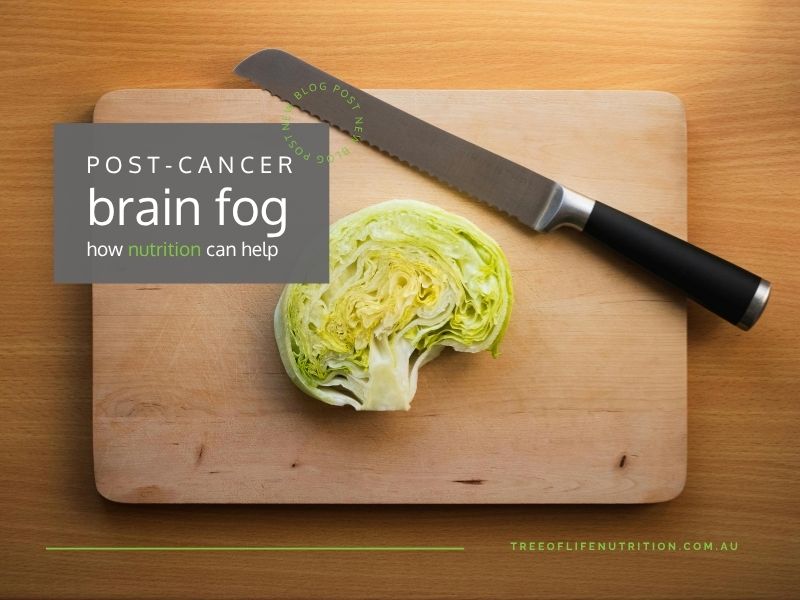
Are you experiencing brain fog after cancer treatment? Often termed “chemo brain” the correct terminology is cancer-related cognitive impairment. Perhaps you’re still feeling tired, or your cognitive skills are still not quite on point. While cancer medicines are amazing at tackling cancer cells, they can be pretty brutal on the rest of the body, including brain function.
After your treatment is over, it’s often mentioned by cancer survivors that they just want to get back to normal. However, there can be many underlying symptoms from treatment such as brain fog to overcome. In this article, we explain the ways in which working with a post cancer dietitian can optimise your nutrition, and support your cognition and overall wellbeing after cancer treatment.
What is cancer-related cognitive impairment?
Cancer Council Australia recognises that some people notice cognitive problems while undergoing cancer treatment. These cognitive problems may impact concentrating, following directions, communicating or performing complex tasks. Some people report feeling tired or foggy and some may experience some memory loss. For some, these symptoms persist even after treatment has ended.
The exact cause of brain fog during and after cancer treatment is not established, however, there are factors which may contribute to it. Inflammation, side effects of the treatment itself as well as related medications, disrupted sleep, hormonal changes, gut dysbiosis and depression and anxiety may play a role.

How nutrition can support brain fog after cancer treatment
A personalised whole-food diet and nutrition plan can play a role in reducing ongoing symptoms of brain fog following cancer treatment. Focusing on nutrition may seem like a simple approach, but after the complication of cancer treatment, it is often welcome.
After a gruelling regimen, some clients often say that focusing on eating well and nourishing the body through foods is a gentle way they can stay in control of their overall health and brain function after cancer. So how can nutrition help brain fog symptoms?
Reducing inflammation
Cancer treatments such as chemotherapy and radiation are effective at killing cancer cells, but they also attack healthy cells too. This can result in sustained low-level systemic inflammation after cancer treatment.
Studies show that an anti-inflammatory diet can reduce levels of chronic inflammation. This occurs by lowering pro-inflammatory biomarkers and providing nutrients that can directly dampen the inflammatory response. An anti-inflammatory diet may also offer a protective effect, by fortifying the body’s metabolic processes.
An anti-inflammatory diet of antioxidant-rich foods is a vital way that we can support the body after cancer treatments. This includes high levels of omega-3 fatty acids, vitamin C, and polyphenols and high fibre, prebiotic foods and reduced levels of processed foods.

Supporting gut health
Gut health has a significant link to brain health, and science is continuing to strengthen our understanding of this connection.
Possible causes of brain fog in cancer patients been studied. Particularly in relation to damage to the microbiome during cancer treatments such as chemotherapy. Early animal studies are finding links between cancer treatment and gut dysbiosis.
Addressing gut dysbiosis, motility, and microbiome health naturally through foods could not only help improve digestive function, but cognitive function also.
Nourishing the body and brain
Nutrient depletion can be common after cancer treatment, especially if your appetite has been impacted. Attention to adequate nutrition can help restore balance and ensure that key nutrients are part of your post-cancer diet.
Seeing a dietitian can also be a supportive place to help you make sense of the food chemical maze, and reduce your intake of processed foods while increasing your consumption of whole foods for optimal health.
There are key foods that are also particularly supportive for brain health, and a dietitian can ensure these foods are personalised to your tastes and nutritional needs.
Helping you find a new routine
Incorporating a gentle routine with food and lifestyle is a great way to reduce overwhelm if you are experiencing brain fog after cancer treatment. Some people feel unsure which foods to choose for the best nutrition. Some also feel a sense of confusion, fatigue, or ongoing stress and anxiety around food. All this can make meal preparation and planning difficult.
Seeing a dietitian to help you plan meals can be a supportive way to ease back into normal life after treatment has ended. A dietitian can take the guesswork out of planning healthy, nutrient-dense meals, and recommend easy options if you are having a particularly ‘foggy’ day. That way, mealtimes feel easier more of the time.
It can also be helpful to incorporate regular sleep, hydration and gentle exercise alongside your new eating plan, which are also wonderful for whole-body and brain health!
The Mediterranean diet for brain fog
The Mediterranean Diet is scientifically supported as a leading diet for optimal health. A 2019 review examined the role the Mediterranean diet may play in cancer prevention for a range of cancers. The Mediterranean diet is also an easy-to-follow, and enjoyable way to nourish your health. Here’s why when working with patients who are experiencing brain fog after cancer treatment, we utilise this way of eating as the basis for a personalised eating plan.
Anti-inflammatory diet
The Mediterranean diet is one of the most supportive anti-inflammatory diets you could investigate.
It’s abundant in gut-loving fibre-rich foods, and also rich in antioxidants such as:
- Vitamin C
- Vitamin E
- beta-carotene
- selenium
- flavonoids
- polyphenols

Emphasising whole foods
This well-researched, scientifically backed diet is based upon whole foods. It contains an abundance of fresh fruit and vegetables, fish, olive oil, nuts, and legumes, and lower amounts of processed foods.
Abundant within the Med diet is also a range of ‘superfoods’ such as tomatoes, berries, green leafy vegetables, cruciferous vegetables, and more, which have been associated with lower cancer risk.
The high focus on healthy fats from avocado, fish and olive oil delivers an abundance of omega-3 fatty acids and reduces consumption of potentially harmful trans fats.
Not restrictive and easy to follow
After the gruelling routine of cancer treatment, it’s helpful to find a new eating plan that is simple to follow – especially if you’re experiencing brain fog!
The Mediterranean diet is naturally abundant in nutrients. Aside from that, generations of Mediterranean people have perfected the flavours of Mediterranean eating! It’s one of the best diets for not feeling like you’re restricting yourself. That’s because it’s satiating, offers a variety of flavours, and nothing is “off limits” so you’re more likely to stick with it.
If a food isn’t to your taste, it can be easily swapped out – because the Mediterranean diet is more a lifestyle than a diet. It’s a way of eating that offers a helpful guide for prioritising healthy options. The Med diet emphasises increased consumption of plants and reducing processed foods. Mediterranean recipes reflect a love of eating, and emphasis on connection through food.
So when you work with your dietitian to create a Med diet focused post-cancer plan it’s also a plan you can joyfully share with your loved ones.
Looking for support to address symptoms such as brain fog after cancer?
Our dietitians offer a gentle and personalised approach to post-cancer nutrition, working with you to nourish your body after treatment and support a lifestyle of survivorship.
DISCLAIMER:
The content in this article is not intended as medical advice. It is also of a general nature and is not tailored to your individual circumstances. A 1:1 consultation is always the best approach. Our dietitians provide nutrition support to assist wellbeing after cancer treatment. This service does not diagnose or treat cancer and is designed to complement, not replace medical care.
Read more about cognitive health and the Mediterranean diet
Brain Fog after Cancer Treatment? How Nutrition can Help
Simple and Healthy Eating for ADHD and Neurodiversity
The Gut-Brain Axis and Improving Mood with Diet